Sorocaba/SP · Urban Planning and Urban Regeneration
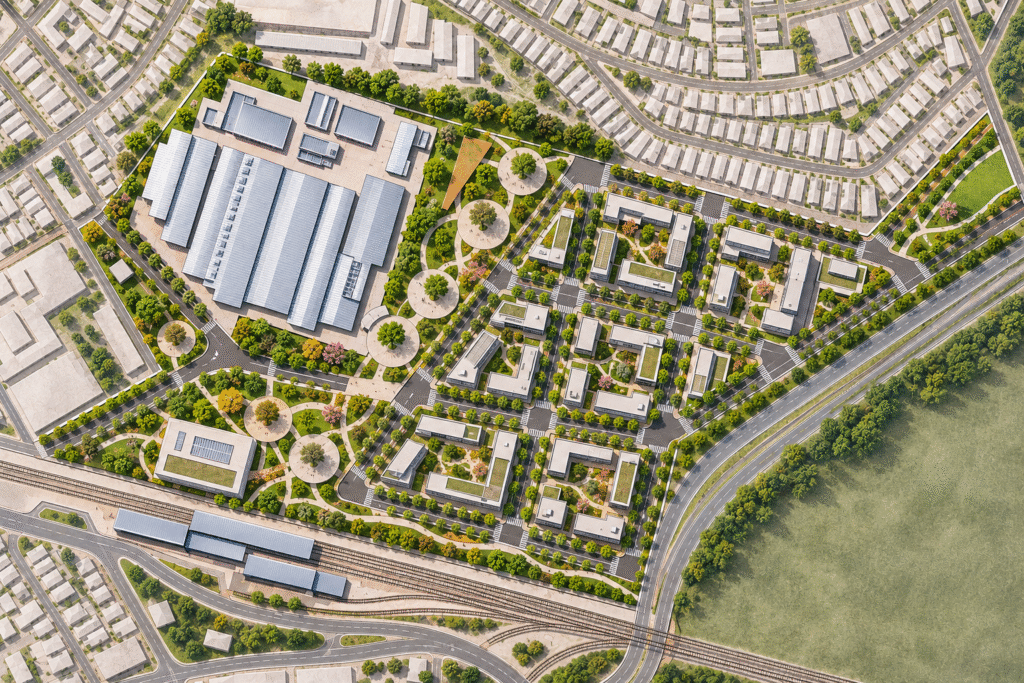
The Project
The Sorocaba Railway Complex represents a strategic opportunity for urban regeneration, combining the preservation of historic heritage with the creation of a new center for culture, innovation, the creative economy, and urban development.
Developed jointly by LUCO Arquitetura e Urbanismo and BLA+, the conceptual study proposes transforming an area of approximately 241,000 m² into a mixed-use district integrating housing, commerce, services, education, technology, and public spaces.
The proposal seeks to restore vitality to an underused area and reconnect it with the city, preserving its railway heritage while creating new opportunities for social interaction, employment, and quality of life.
Heritage and Urban Context
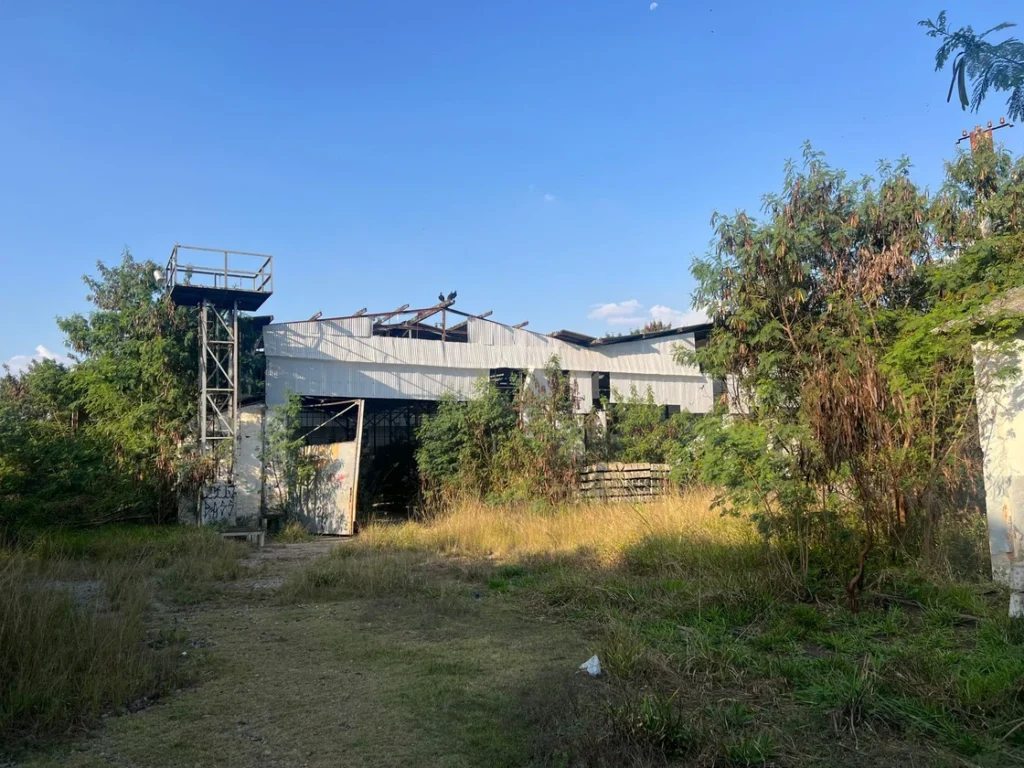
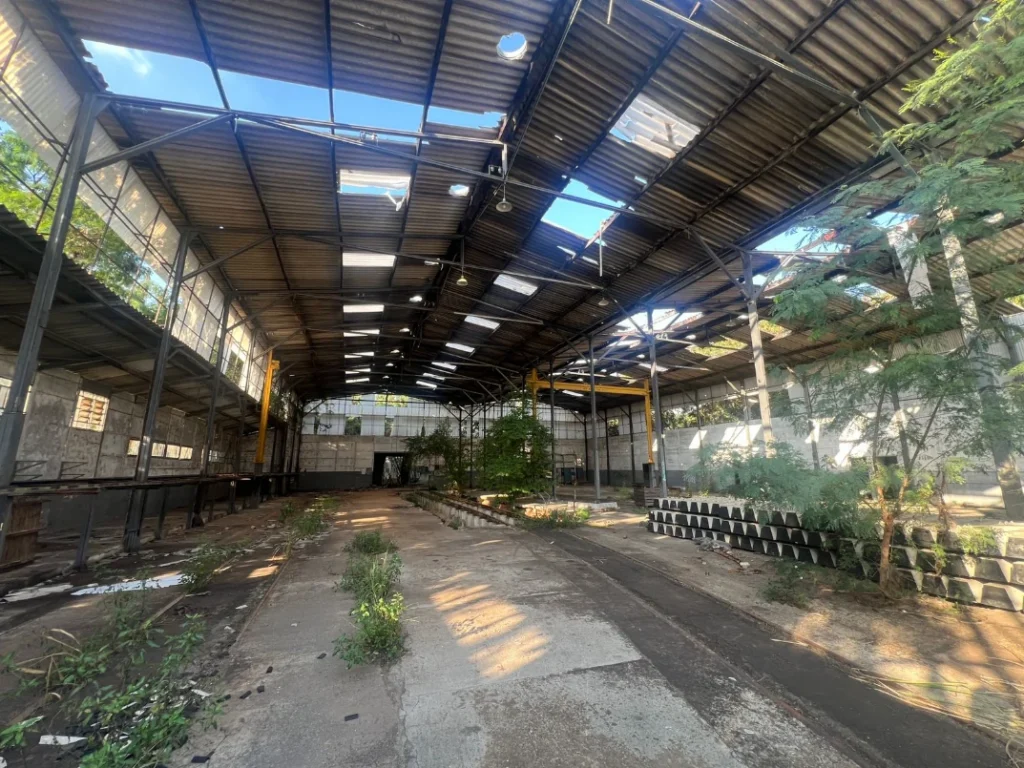
The Sorocaba Railway Complex is an important part of the city’s industrial heritage and economic development history. Its former workshops, warehouses, and railway structures constitute an architectural legacy of significant historical and cultural value.
The study considers the existing buildings and their state of conservation, proposing the preservation and adaptive reuse of historic structures alongside the regeneration of underused spaces and the creation of new opportunities for the community.
Surrounding Urban Environment
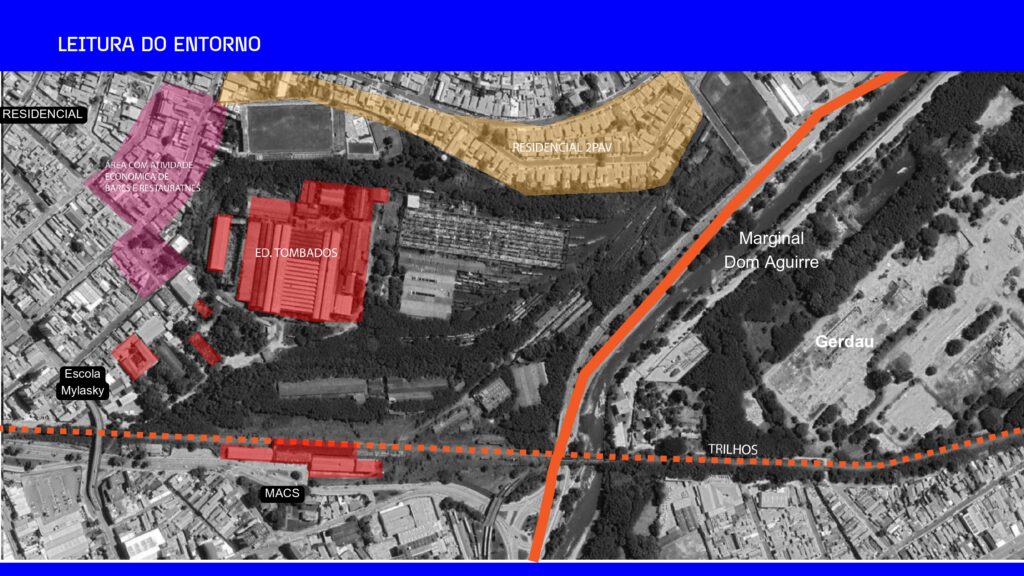
The territorial analysis identifies connections between railway heritage, established residential neighborhoods, cultural facilities, and existing transport infrastructure.
Proximity to the Sorocaba Museum of Contemporary Art (MACS), Santo Antônio Bus Terminal, Dr. Afonso Vergueiro Avenue, and Dom Aguirre Marginal Road highlights the potential to integrate the complex into the city’s urban dynamics.
Urban Integration and Mobility
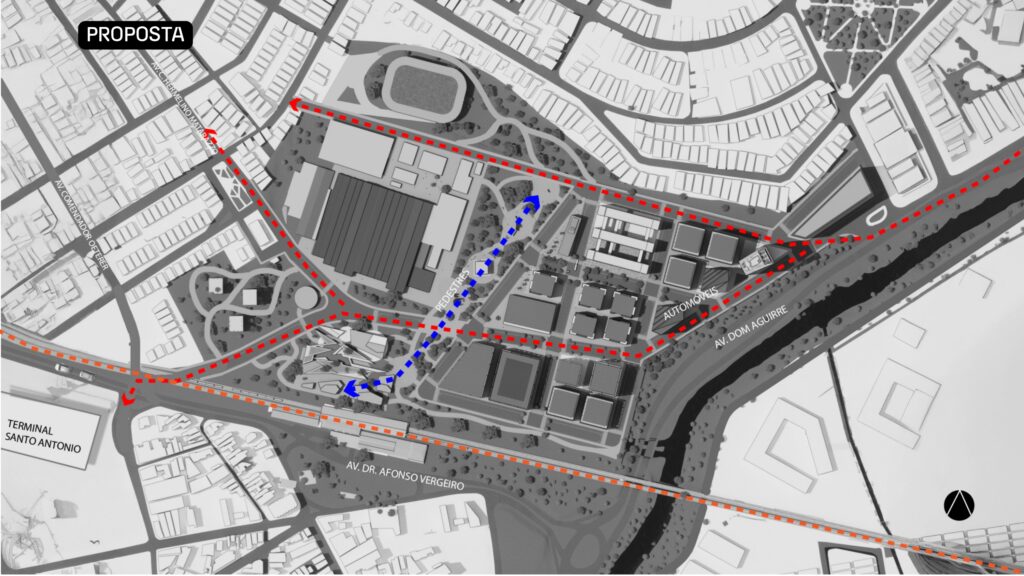
The urban planning strategy seeks to overcome the site’s isolation by reorganizing access points and creating new connections between the complex, neighboring districts, and transport networks.
A key element is a green pedestrian boulevard connecting public squares, cultural facilities, public spaces, and new urban sectors. Shared streets and active mobility routes complement this structure.
The proposal also considers new vehicle access points and the potential for future integration with railway transport, improving territorial connectivity while preserving the site’s historic character.
Urban Program and New Uses
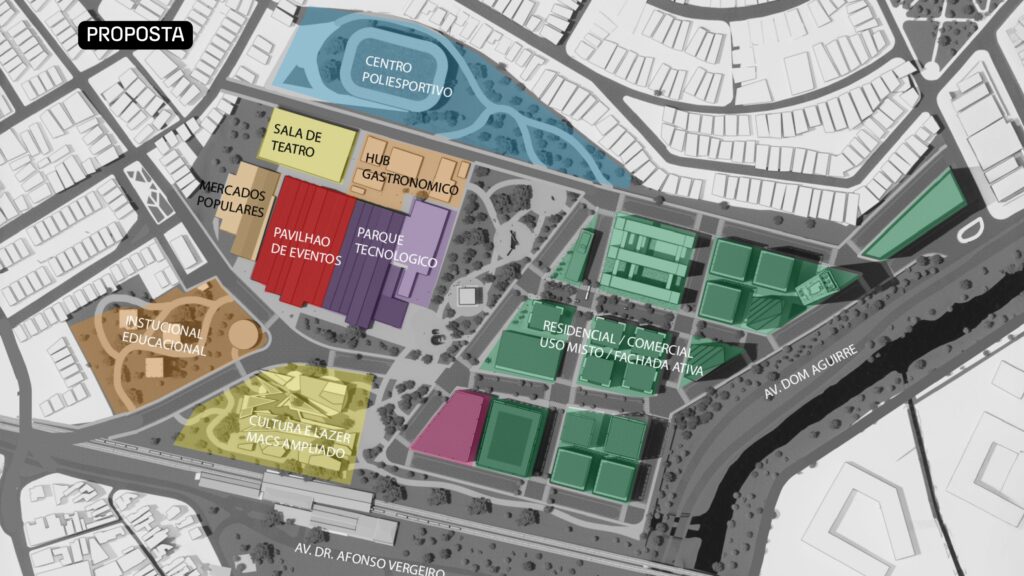
The masterplan organizes the site into complementary sectors, combining the preservation of railway structures with new activities intended to stimulate urban vitality and economic development.
The historic buildings are conceptually designated for cultural activities, event venues, theater, gastronomy, public markets, and technology and innovation environments. The program also includes educational and sports facilities, green spaces, and gathering areas.
New residential and commercial buildings, mixed uses, and active ground-floor frontages complement the proposal. Housing diversity and proximity between homes, workplaces, shops, and leisure facilities aim to promote social inclusion, reduce travel needs, and encourage activity throughout the day.
Public Presentation
On December 5, 2024, the study was presented at the Sorocaba City Council during a public hearing initiated by council members Ítalo Moreira and Iara Bernardi.
The independent proposal, developed by LUCO Arquitetura e Urbanismo and BLA+, was presented by architects and urban planners Rodrigo Luco and Guaen Lee as a technical contribution to the debate on revitalizing the railway heritage.
The presentation addressed historic preservation, the creative economy, housing diversity, sustainable mobility, and innovation environments as strategies for urban transformation.
Institutional record: Public presentation at Sorocaba City Council — December 2024.
Presentation Recordings
Institutional Presentation — Sorocaba City Council
Continuation of the Presentation — Urban Planning Proposal
Media Coverage
Television Report on the Revitalization Proposal
Cruzeiro do Sul Newspaper Article — December 6, 2024
Project Presentation
Explore the conceptual presentation of the Sorocaba Railway Complex, developed by LUCO Arquitetura e Urbanismo and BLA+ and publicly presented in December 2024.
Project Information
- Project: Sorocaba Railway Complex
- Location: Sorocaba, São Paulo, Brazil
- Year: 2024
- Study area: Approximately 241,000 m² — preliminary estimate
- Project type: Urban Planning, Masterplan, and Urban Regeneration
- Scope: Conceptual study for urban regeneration, territorial integration, and adaptive reuse of railway heritage
- Developed by: LUCO Arquitetura e Urbanismo + BLA+
- Project background: Independent proposal jointly developed by LUCO Arquitetura e Urbanismo and BLA+, presented at Sorocaba City Council at the invitation of council members Ítalo Moreira and Iara Bernardi
- Status: Conceptual study publicly presented; not implemented